sep 6
Vem ska ha rätt att fiska?


Fisk och annat biologiskt liv i havet är en gemensam resurs som tillhör alla, inte något som kan ägas privat. Vem ska då ha rätt att fiska? Det var temat för en konferens som Isabella Lövin och gröna gruppen i parlamentet arrangerade den 2/9. Bl a deltog fiskare från olika länder inom EU.

-88% av fiskebestånden i EU:s vatten är överfiskade, inte på grund av brist på fiskepolitik, utan som ett resultat av den fiskepolitik som bedrivits, sa Isabella Lövin.

Fiskerättigheter har fördelats på historiska grunder. Den som fiskat mycket får fortsätta fiska mycket. Men med en ny fiskpolitik måste detta förändras menar den gröna gruppen i EU-parlamentet och vill fördela fiskerättigheter efter sociala och miljömässiga kriterier.

De ska bl a innefatta hur fisket bidrar till sysselsättning och lokal ekonomi och vilken miljöpåverkan fisket har, t ex vad gäller fiskeredskap, metoder och energiförbrukning.

Det är en tanke som har stort stöd både bland fiskare, forskare, miljöorganisationer och andra som deltog i konferensen.

Det småskaliga fisket är generellt sett mer socialt och ekologiskt hållbart än det storskaliga. Det har en enorm betydelse för att små kustsamhällen ska överleva.

-Fisken måste åter göras till en kollektiv resurs, sa Jerry Percy, fiskare från Storbritannien. Idag finns många fiskerättigheter hos kvotahandlare som bara är ute efter att handla med dem och göra vinster. Nu har vi en chans att förändra fiskepolitiken!

-Det är inte ofta någon lyssnar på oss småskaliga fiskare, sa Ramon Tarridas Campos, fiskare från Katalonien i Spanien. Därför är vi så glada att vara inbjudna hit. Ett exempel på att det småskaliga fisket är miljövänligare är att vi släpper ut hälften så mycket koldioxid per kilo fångad fisk jämfört med de stora båtarna.

Charles och Robert Olsson är räkfiskare från Grebbestad och berättade om sitt KRAV-märkta fiske, där man nästan helt eliminerat bifångster, genom att man använder burar för räkor och havskräftor som gör att fisken som fångas kan ta sig ut igen.

Genom överenskommelser mellan myndigheter, fiskare och miljöorganisationer har man bestämt vad som ska skyddas och norra Bohuslän är nu det artrikaste havsområdet i Sverige.

-Det som de gröna här i parlamentet föreslår är ungefär det som vi gör i norra Bohuslän, sa bröderna Olsson.

Både fiskare och andra talade om vikten av en lokal förvaltning av fiskeresurserna som ger möjlighet att anpassa fisket efter lokala förhållanden. Dominique Lebrun, ordförande i den lokala fiskekommittén i Turballe i Frankrike, berättade om hur man klarar fisket på en hållbar nivå genom selektiva redskap, tydliga regler och böter för de som bryter mot dem.

Men det finns många orosmoln på himlen, ett heter ITQ, individual transferable quotas. Det är fiskekvoter som kan köpas, en sorts privatisering av fiskeresursen. I Sverige har den införts för sillfisket.

-Om det införs generellt blir det döden för det småskaliga fisket, sa Charles Olsson från Grebbestad och fick medhåll från alla europeiska kollegor och även av deras organisation, Europêche.

Från EU-kommissionen medverkade Carla Montesi, chef på DG Mare, med ansvar bl a för fisket i norra Europa.

-Fiskekommissionär Maria Damanaki är medveten om riskerna med ITQs och tycker inte att de ska införas för det småskaliga fisket, sa Carla Montesi. Vi har ännu ingen ståndpunkt vad gäller rätten till fiskeresurserna, men har sympati för de ”gröna” kriterierna om social och ekologisk hållbarhet. Kommissionen är fast besluten att genomföra en reform för hållbar fiskepolitik i Europa.

I november kommer kommissionen att ha ett viktigt möte med berörda parter och ett lagstiftningsförslag om ny fiskepolitik inom EU väntas under våren 2011.

aug 31
Isabella nominerad till årets EU-parlamentariker

Som enda svenska politiker har Isabella Lövin, Miljöpartiet de gröna, nominerats till utmärkelsen Årets parlamentariker i EU. Hon är nominerad i klassen Fiske. Sedan sex år tillbaka delas priset ut i fjorton olika klasser, motsvarande parlamentets utskott.

Priset MEP Award delas ut av The Parliament Magazine. Politikerna röstar fram en pristagare bland de tre som nominerats i varje klass. Vilka som vunnit tillkännages den 29 september.

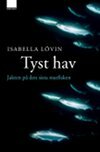
Isabella Lövin är ledamot av EU-parlamentets fiskeutskott och bland annat känd för boken Tyst hav, som är mångfaldigt prisbelönad.

För mer information

Isabella Lövin  070 7704275

Marita Pahlén, pressekreterare  070 6750373

jun 11
Passiv kommission gör inget för att rädda blåfenad tonfisk

I mars skrev jag och min kollega Raul Romeva Rueda till kommissionen och krävde att EU skulle stoppa industriellt fiske av blåfenad tonfisk och även sätta stopp för exporten. Nu har vi fått ett patetiskt svar som innebär att EU-kommissionen inte alls tar sitt ansvar för den utrotningshotade fiskarten.
Bakgrunden är att EU – kommission, råd och parlament – ställde sig bakom att att blåfenad tonfisk skulle sättas upp på CITES-listan, Appendix 1. Det innebär att handel med arten förbjuds. Detta skedde inför det internationella mötet om CITES-konventionen tidigare i vår. Tyvärr misslyckades det internationella samfundet med att ta sitt ansvar och blåfenad tonfisk fick inte det skydd den behövde. I det läget skrev vi till fiskekommissionär Maria Damanaki och miljökommissionär Janez Potocnik och begärde att EU ska stå kvar vid sin ståndpunkt och ensidigt införa fiskestopp och exportstopp. Det svar vi fått är en besvikelse. Man vill invänta nästa möte med ICCAT ( International Commission for the Conservation of Atlantic Tunas), som hittills aldrig vidtagit de åtgärder som behövs. Om inte det ger resultat så ”utesluter inte kommissionärerna att förslaget att skydda blåfenad tonfisk kan läggas fram till nästa CITES-möte år 2013″ . Fullkomligt skrämmande passivitet!

Vårt brev till kommissionärerna

Damanakis och Potocniks svar

apr 1
Kommissionens svar om Västsahara

Jaha. Så har svaret kommit på min fråga om hur EU-kommissionen, efter tre års fiskeriavtal med Marocko, har försäkrat sig om att fiskeriavtalet gynnar det ockuperade Västsahara, och inte bara är ren stöld av naturresurser från ett ockuperat folk. Utan några detaljer, utan några dokument, utan att svara på någon av de mer detaljerade frågorna jag ställt, ge någon redogörelse för hur informationen ska samlas in eller redovisas, eller hur man ska skilja inflyttade marockaner från västsaharier åt, får man väl anse att svaret är: Vi vet inte, och vi har inte brytt oss om att fråga. Döm själv:

Parliamentary questions
10 February 2010
P-0746/10
WRITTEN QUESTION by Isabella Lövin (Verts/ALE) to the Commission


Subject: Western Sahara and Morocco fisheries agreement

P-0746/10

The Commission has stated that it concurs with the authoritative statement of the legal adviser to the United Nations in his letter of 29 January 2002 (the ‘Corell opinion’). That opinion states that any resource exploitation must take place with the consent, ‘for the benefit of’ the people of the Western Sahara. It is clear that no consent has been given by Polisario.

The Commission has also provided data showing that EU‑flagged vessels have been operating in the waters off the Western Sahara.

Now that the agreement with Morocco has been in force for three years, could the Commission please explain what benefits have accrued to the people of the Western Sahara, in particular the Saharawi. More precisely:

1. Has the Commission raised the specific question of benefits for the people of the Western Sahara (in particular the Saharawi) at any of the Joint Committee meetings that are held with Morocco? Has the Commission requested information on such benefits and what information did the Moroccan authorities provide? We would appreciate receiving copies of any such information.
2. If the Commission has not raised this issue could it please explain why it has not?
3. Is the Commission satisfied that Morocco is implementing the recommendations of the Correll opinion, with regard to providing benefits to the local people, in particular the Saharawi?


P-0746/10EN

Answer given by Ms Damanaki

on behalf of the Commission

(18.3.2010)


In response to the question of the Honourable Member on the implementation of the Fisheries Partnership Agreement (FPA) between Morocco and the EU, the Commission would like to provide the following information.


At the last meeting of the Joint Committee meeting held with Morocco (2-3 February 2010), the Commission services requested the Moroccan authorities to provide information about the socio-economic effects of the fishing activities and of the sector support foreseen by the FPA.


The Commission is waiting for detailed information from the Moroccan authorities on the subject by the first quarter of 2010. In any case, the Commission would like to underline that some activities of the sector support programme do benefit the people of Western Sahara, notably in the area of support to professional training. For example, some of these activities support the centre for the development of professional skills in the area of fisheries in Dakhla as well as the technical institute for maritime fisheries in Layyoune.


mar 26
EU bör på egen hand stoppa exporten av blåfenad tonfisk

- EU måste se till att införa ett eget skydd för den blåfenade tonfisken eftersom det internationella samfundet misslyckats kapitalt med att skydda den. Det skriver Isabella Lövin, EU-parlamentariker för Miljöpartiet och hennes spanska kollega Raul Romeva Rueda i ett brev till fiskekommissionär Maria Damanaki.

Efter att mötet i Doha med konventionen för handel med hotade arter, CITES, misslyckats med att införa handelsrestriktioner bl.a. för den hotade blåfenade tonfisken reagerar nu Isabella Lövin och Raul Romeva Rueda i Europaparlamentet. Bland de länder som hårdast motsatte sig förslaget att skydda den blåfenade tonfisken finns Japan, Kina, Australien och Kanada.I ett brev till Kommissionär Maria Damanaki, ansvarig för havs- och fiskefrågor i Europakommissionen föreslår de att EU på egen hand bör införa förbud mot industriellt fiske efter blåfenad tonfisk samt förbjuda export av arten utanför EU.

Kontakt
Isabella Lövin 070 770 42 75
Staffan Danielsson, fiskerådgivare, 0032 491 22 28 30

mar 23
BBC-discussion on EU fisheries reform

This week-end I was in a BBC World discussion och the reform of the Common Fisheries Policy with a few other EU parlamentarians.

feb 9
Q&A: ”There’s a Limit to Fish Harvesting”

Isabella intervjuas av nyhetsbyrån IPS.

Q&A: ”There’s a Limit to Fish Harvesting”
David Cronin interviews ISABELLA LÖVIN, Swedish fisheries policy activist

BRUSSELS, Feb 8, 2010 (IPS) – The perilous state of the world’s fish stocks has received less media attention than the more visible, palpable environmental problems like air pollution. Isabella Lövin is seeking to redress that balance. Her 2007 book ‘Tyst hav’ (Silent Seas) hit the best-seller list in her native Sweden, garnering her three awards, including the title of ‘Journalist of the Year’.

Blending the techniques of investigative journalism with the style of a crime thriller, the book is still awaiting publication in the English language. But it has helped introduce Lövin to an international audience. Elected last year as a Green member of European Parliament, she has a new platform to push for a fundamental rethink of the European Union’s (EU) 40-year-old common fisheries policy.

Q: Why did you decide to write a book on fisheries?

A: In the autumn of 2002, there was an election campaign in Sweden. For the first time, there was a discussion about Swedish cod declining. It came to everyone’s knowledge because the Green Party of Sweden demanded that there should be a complete fishing ban [for cod] for one year since cod in Swedish waters was acutely depleted. At that time I was working for a food magazine and we were discussing if we should stop printing cod recipes or not. We decided that I should do an article and investigate what the status of Swedish cod was.

Sweden eventually decided on a cod moratorium of one year. But the European Commission said we couldn’t have this as it was against the common fisheries policy. It said it would be discrimination against Swedish fishermen if they wouldn’t be allowed to fish, when [other] European fishermen would be allowed to fish for the same stock in the same waters.

This was a mystery to me. We wanted to save a wild resource but on the other hand the European Commission told us we can’t do this. I could not understand who is wrong here and who is crazy here.

As a Swede, I was brought up in what I thought was the most environmentally conscious country in the world. But I found out that there wasn’t even 1 cu m in our waters that was protected from fishing, while on land we have had national parks where there has been no hunting for 100 years.

What was going on in the seas was about zero in the order of public opinion, while if you talked to scientists, they would all say the same thing [about stock depletion]. It was not just cod. All stocks were declining. The European eel has declined by 99 percent since the end of the 1980s. The spur dog – a small shark that lives in Sweden – has declined by 95 percent in 20 years.

All of this has been going on without any protection for these species. I couldn’t believe it. I had never written a book before but I realised it would take a book to put all this together. Whose interests are governing this? Why don’t normal environmental laws apply to this? Why do we not protect species that are acutely and obviously endangered?

Q.: You described the EU’s policy as a mystery. Did writing the book help you to solve the mystery?

A.: I realised you can’t just single out one thing and say this is the explanation. The idea of the 1970s and 1980s was the more you invest in this industry, the more you will gain. The more boats you build, you will get much larger catches. Of course, this was true for the first five years. Then all of a sudden the fish disappears.

One very important thing is that what was happening was under the surface. This leads to a large disinterest from the general public. It is much easier to make people angry and engaged if there is the destruction of wolves, something you can see, than something that is under the surface.

It is difficult for politicians to stand up for something if they don’t get encouragement from their voters to do so. Fishermen, on the other hand, are very efficient lobbyists, they have a very strong voice. Every time a politician tries to reduce quotas or diminish fishing areas, there is always a big outcry from fishermen. That is hard for politicians to handle because they think of their electorates in coastal communities.

When most people think of decline of the marine environment, they think of toxic substances, climate change, eutrophication [an increase of chemical nutrients that stimulates the growth of plants on water] – all these environmental factors. But the fact is that the overwhelming threat towards marine life is fishing.

In the Baltic Sea, we have a body called Helcom (the Baltic Marine Environment Protection Commission). For fifteen years now, all the countries in the Baltic get together to talk about dangerous oil transports, eutrophication, they talk about everything, but not about fisheries. That is very strange.

The FAO [the United Nations’ Food and Agriculture Organisation] has brought out a major report called Blue Carbon about the role of oceans in capturing carbon dioxide. Oceans cover 71 percent of the planet. They have a stabilising effect on the climate. Ecosystems that have evolved over four billion years have dramatically changed in the past 50 years.

Q: Every December, the EU’s marine ministers set quotas limiting the amount of fish that may be caught over the following year. Given that they are under intense pressure from fishermen to set those catch levels above what scientists recommend, do you think this procedure needs to be stopped?

A: I don’t think ministers should be the ones to set quotas. We should have long-term management plans, instead of setting quotas year by year. We should not have the kind of circus, where everyone tries to grab the biggest bit of the cake every December.

The ministers should agree on principles: to follow the precautionary approach principle, the ecosystem approach, best practice etc. Then the figures on quotas and kilowatts and days at sea, I don’t think the ministers should set those. They should be set at a lower administrative level, using the best data available.

The cardinal problem is that we let ministers who haggle for the highest quotas come home as heroes.

When we think of marine resources, we can’t really continue to think in terms of traditional market-capitalist thinking. In the oceans, there is a limit to how much they can reproduce and how much you can harvest. This doesn’t fit in with industrial thinking.

Q: You have studied the effects of the EU’s fisheries agreements with Africa. What would be the main recommendations you would make to ensure that the payments that the EU makes to fish in African waters genuinely benefit Africans?

A: Fisheries, as well as agriculture, should be a major focus of development policy. But the EU’s fisheries policy has nothing to do with development.

I asked [Andris] Piebalgs, the new [European] commissioner-designate for development, recently: ‘’ Do you think aid to the fisheries sector [in Africa] should only be given if European vessels have access to fish in [African] waters?’’ He said: ‘‘I think one should not be linked to each other.’’ But the case is that they are. We do not have a coherent European development policy.

The fishing fleet should pay for its own access. Taxpayers should not have to pay for that. I don’t think the Swedish and Danish and British should pay so that Spanish and Portuguese vessel owners have access to African waters.

Q: You have queried the legality of the EU’s fisheries agreement with Morocco because it allows European vessels to operate off the coast of Western Sahara, which is under occupation. What is the latest state of play on that issue?

A: The [European] Commission is clinging to the position that if it [the agreement] goes to benefit the occupied people, then it could be allowed. That was [the position in] 2005. Now we’re in 2010. Who has presented any evidence that the money from the agreement goes to the Sahrawi people?

We asked the European Parliament legal service if with the facts at hand now, it would consider the fisheries agreement with Morocco as legal. We have a legal opinion in the [Parliament’s] development committee since the autumn. It concluded that ‘no we can’t find any evidence’ [that the agreement benefited the Sahrawi people].

It has been proven that European vessels are fishing in the waters of Western Sahara. We have a list of boats and nationalities fishing there. Now that it has been proven they are fishing there, the next question is whether or not this is in line with international law. The European Parliament’s legal service can’t see how this has come to benefit the Sahrawi people. So the agreement should be renegotiated and it should exclude Western Saharan waters.

Q: What is the status of the EU’s fisheries agreement with Guinea-Conakry, following the coup that occurred there in late 2008?

A: This is a fantastic example of how the EU does one thing with one hand and completely the other thing with the other hand. When the massacre happened in Conakry [in September 2009], the aid from the EU was automatically stopped and [European Commission President José Manuel] Barroso came out with a very strong statement. But two days later, we were going to agree to pay one million euros (1.36 million dollars) [under the fisheries agreement]. This would have been paid directly into the pockets of the same man [Guinean military leader Moussa Dadis Camara] who had ordered that fire should be opened on innocent people in a football stadium, killing 153 people. Everybody knew there was no way that this money was going to hospitals or schools.

Until the [European Parliament’s] fisheries committee voted ‘no’, nobody was taking any initiative with regard to the fisheries agreement [with Guinea]. From the beginning, the Commission was coming to the committee and talking about the employment of European fishermen [off the Guinean coast]. But the agreement only covers 24 boats so the number of European fishermen who get employment is not many more than the number of people killed in the stadium in Conakry. It is not decent that we kind of close our eyes to a country like that because we think that maybe 100 European citizens might have some small economic benefit or loss because of what they are doing there.

Q: Do you eat fish? And should there be an international campaign encouraging people to eat less fish?

A: I eat some fish but only the ones that are not threatened. You are supposed to be wiser if you eat lots of Omega-3. So I hope people eat some fish and this will give them a good idea of how to manage the planet in a sustainable way. Joking apart, we could eat fish to a certain limit but we can’t increase our intake of fish forever and ever. It will be a problem if there are nine billion people on the planet by 2050. Europe’s own catches have gone down by 25 percent in the last ten years. At the same time, Europe has increased consumption [of fish] by 20 percent. It’s an equation that doesn’t add up.

(END)

jan 12
Sensationellt svar av Piebalgs

Tilltänkte kommissionären för utvecklingsfrågor Andris Piebalgs frågades ut av parlamentet i går, jag envisades med att ställa frågor om EU:s fiskeriavtal med tredje världen. Piebalgs hävdade att fiskeriavtalen har en utvecklingsdel som hjälper dessa länder, och han betonade att de är ”partnerskapsavtal”. Jag fick möjlighet att ställa en tredje fråga om samstämmigheten mellan fiskeripolitik och biståndspolitik ( så kallad policy coherence)  och då kom detta överraskande svar som i princip borde sätta stopp för fiskeriavtalen i deras nuvarande form:

Isabella Lövin (Verts/ALE). About policy coherence – you mentioned fisheries and you referred to ‘partnership agreements’ – do you think it is right to give sectoral support to local fisheries in Africa only if the EU is allowed to fish in their waters?

1-092

EN

Andris Piebalgs, Commissioner-designate. - On sectoral support: I need to discuss this issue with my colleague, because I think a fisheries support agreement is in a way very particular, because I think it is a transitional arrangement, because we have an interest, basically, in these countries having competitive fisheries, because that means that, at the end of the day, we will need to provide less development aid – perhaps none at all.

So we have a lot of interest and, as far as connecting support with this type of agreement is concerned, I am not aware that it is an issue. I would say it is not the case. I hope it is not the case, because it is a completely different issue. One is that we pay for the right to fish. The other issue is completely independent: it is to support the local fisheries. Why should it be linked? I do not see any necessity for linking, but I will check the details because whether you have an agreement or if you do not have agreement should not be a precondition for support, because the payment that we pay to a fisheries partnership is completely different. We have a chance to catch fish and we get jobs for our fishermen.   

dec 26
Årets EU-politiker 2009

Fick nyss den oväntade utnämningen, av tidningen Miljöaktuellts redaktion. Känner mig otroligt hedrad.

nov 26
Kommissionens svar om hajfiske

Jag och två gröna kollegor har just fått svar från kommissionen på några ytterst brännande frågor angående bristen på förvaltning och skydd av hajar.  Tydligen ska man se över förordningen om avlägsnadet av hajfenor ombord på fartyg. Annars inte mycket att glädjas över.


SKRIFTLIG FRÅGA E-4604/09

från Raül Romeva i Rueda (Verts/ALE), Satu Hassi (Verts/ALE) och Isabella Lövin (Verts/ALE)

till kommissionen


Angående:         Hajfiske i EU


Hajen är en art som förökar sig långsamt och är oerhört känslig för överexploatering och som återhämtar sig långsamt från utfiskning. Enligt IUCN:s rödlista klassificeras ungefär en tredjedel av EU:s haj- och rockbestånd som ”utrotningshotat”. Tidigare har haj betraktats som bifångst vid fiske av arter som tonfisk och svärdfisk. Detta har förändrats. Pelagiska hajar fiskas nu av EU:s ytlångrevsfartyg. Kan kommissionen lämna några uppgifter om ytlångrevsfartygens fångster i de olika medlemsstaterna? Vi skulle uppskatta om uppgifterna delades upp efter enskilda arter och efter hav (Atlanten, Indiska oceanen osv.).


Ett flertal organisationer, däribland Oceana och Shark Alliance, hävdar att tillämpningen av rådets förordning (EG) nr 1185/2003[1], som förbjuder avlägsnande av hajfenor, är alltför komplicerad, overkställbar och ogenomförbar. För att få ett verkligt effektivt förbud mot avlägsnande av hajfenor bör fenorna inte få avlägsnas ombord på fartyg för beredning eller några andra syften, vilket innebär att hajarna måste tas i land med sina fenor intakta utan att några avvikelser tillåts. Dessutom fastställs i rådets förordning (EG) nr 2371/2002 att gränser för fångst och/eller fiskeansträngning ska fastställas för fiskbestånd som är föremål för yrkesfiske. Trots att man i decennier har bedrivit yrkesfiske av haj har denna politik inte tillämpats på hajfiske. Eftersom hajen är en kommersiellt utnyttjad art enligt den gemensamma fiskeripolitiken måste fångsten kontrolleras och regleras med förvaltnings- eller återhämtningsplaner som innehåller mål och åtgärder för ett hållbart utnyttjande av bestånden, fångstbegränsningar och fångstkvoter, bestämmelser om hur många och vilken typ av fiskefartyg som får bedriva hajfiske och samt begränsningar för fiskeansträngningen. Dessutom måste återhämtningsplaner utarbetas för de hajbestånd som redan är utfiskade.


Kan kommissionen kommentera dessa förslag? När kommer kommissionen att föreslå en omarbetad förordning om avlägsnande av fenor? För vilka kommersiellt utnyttjade hajarter kommer kommissionen att föreslå fångstbegränsningar för 2010?


**********


E-4604/09SV Svar från Joe Borg på kommissionens vägnar (12.11.2009)


Nedanstående uppgifter om alla hajarter som inom alla områden fångats av EU:s fiskeflotta har inrapporterats till och registrerats av Eurostat. Uppgifterna är uppdelade efter enskilda arter, medlemsstat och större fiskeområde och avser uppgifterna för det senaste året för vilka det finns fullständiga uppgifter (2007). Samtliga EU-flottors fångster av haj är också inberäknade. Även om det inte framgår av uppgifterna vilka fiskeredskap som används kan man utgå ifrån att de flesta blåhajar (Prionace glauca) och makohajar (Isurus oxyrinchus) fångats av ytlångrevsfartyg. Dessa två arter utgör den klart största andelen av de hajfångster som tas upp av dessa fiskefartyg inom alla fångstområden.


Övriga pelagiska hajarter som fångas av dessa fartyg är långfenad mako (Isurus paucus), storögd rävhaj (Alopias superciliosus), rävhaj (Alopias vulpinus), årfenshaj (Carcharhinus longimanus), silkeshaj (Carcharhinus falciformis), håbrand (Lamma nasus), flerhornig hammarhaj (Sphyrna lewini), hammarhaj (Sphyrna zygaena), och violett spjutrocka (Pteroplatytrygon violacea).


Hajfisket – som det så riktigt påpekas – faller ju inom ramen för den gemensamma fiskeripolitiken. Det finns redan lagstiftning som styr den produktion, de tekniska åtgärder, den kontroll samt den flott- och handelspolitik som bidrar till att hajfisket ligger på en hållbar nivå. Andra åtgärder, även om de inte är specifikt inriktade på hajar, kan ha stor betydelse för hajar särskilt för de som tas som bifångst. Dessa åtgärder vidtas inom ramen för fleråriga planer som exempelvis kontrollen av fiskeansträngningen.


De flesta hajar som fångas av ytlångrevsfartyg tas upp i vatten som förvaltas av regionala fiskeriförvaltningsorganisationer, som t.ex. Tonfiskkommissionen för Indiska oceanen (IOTC) och Internationella kommissionen för bevarande av tonfiskbestånden i Atlanten (ICCAT). EU-kommissionen har, sedan EU:s handlingsplan för bevarande och förvaltning av hajar antogs tidigare i år, aktivt engagerat sig inom dessa internationella organisationer för att främja fortsatt bevarande av hajar. Vid nästa ICCAT-möte i november kommer man att lägga fram konkreta förslag för bevarandet av ett flertal hajarter. Kommissionen gör även aktiva insatser inom andra internationella fora som konventionen om skydd av flyttande vilda djur och konventionen om internationell handel med utrotningshotade arter av vilda djur och växter (Cites) för att garantera ett sunt hajfiske och en sund handel med hajar.


Ett av de specifika målen i den handlingsplan för hajar som antogs tidigare i år är att se över rådets förordning (EG) nr 1185/2003 om avlägsnande av hajfenor ombord på fartyg. Kommissionen har åtagit sig att se till att denna översyn genomförs så snart som möjligt så att bästa tänkbara regler tillämpas inom detta område. Man har redan påbörjat arbetet med den konsekvensanalys som ska ligga till grunden för översynen. Sannolikt kommer man att anta ett förslag nästa år.


När det gäller fångstbegränsningarna för 2010 kommer kommissionen även framledes att fastställa fångstbegränsningar för följande broskfiskar:

  1. Rockor (alla arter) i ICES-områdena IIa, IV, VIa, VIIa–c och e–k, VIId, VIII, IX samt IIIa.
  2. Pigghaj i områden IIIa; II, IV; I, V, VI, VII, VIII, XII och XIV.
  3. Håbrand i alla områden.
    1. Djuphavshaj i alla områden (TAC-förordningen för djuphavsfiske[2]: ingen tillåten fångstmängd för djuphavshaj med tioprocentig bifångst jämfört med TAC 2009).


Vidare får gemenskapsfartyg inte fånga brugd eller vithaj inom några vatten.


[1]     EUT L 167, 4.7.2003, s. 1.

[2]     Totalt tillåten fångstmängd.

« Previous Entries